Water Damage Restoration Sacramento CA
Fast water mitigation, thorough drying, and documented repair planning for homes and businesses across Sacramento. Expect a clear scope, moisture readings you can see, and a work area that stays clean and controlled.
Local help when Sacramento water damage can't wait
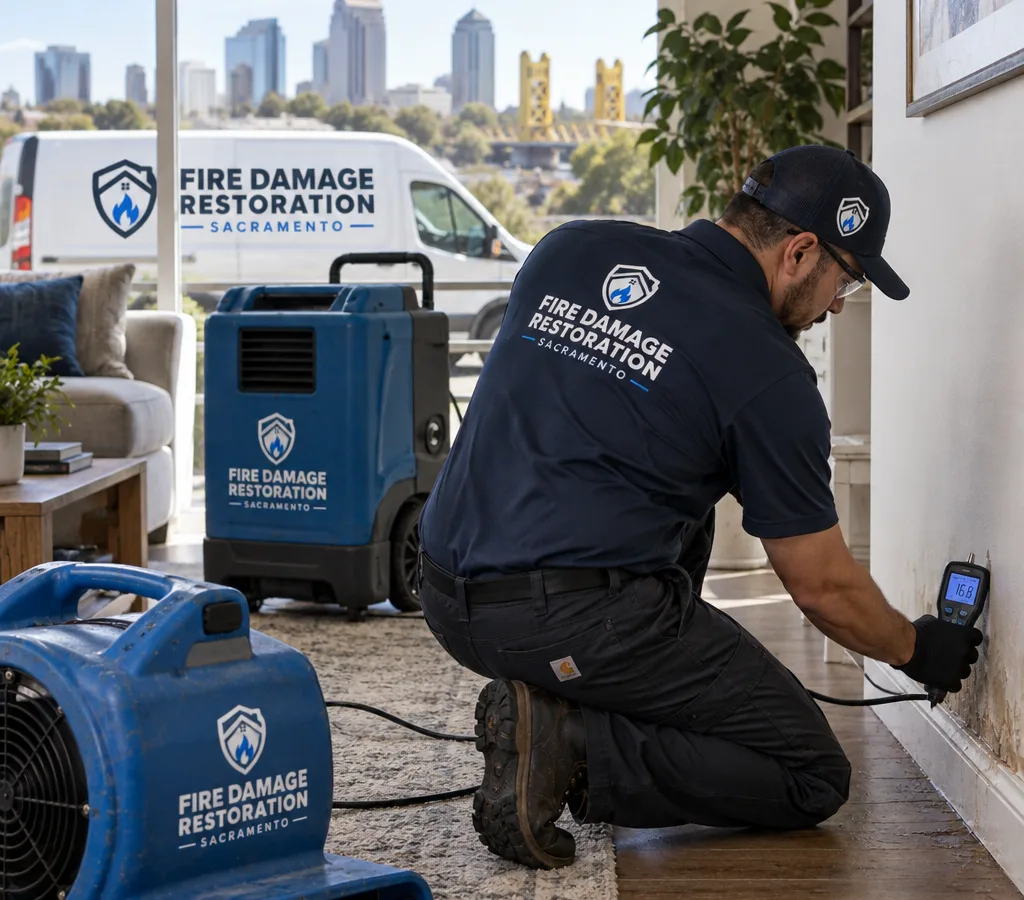
If you are searching for water damage restoration Sacramento CA, you are usually dealing with a problem that changes by the hour: water spreading under flooring, drywall wicking upward, and humidity rising behind walls. Our Sacramento team focuses on stopping the spread first—water extraction and containment—then drying and monitoring, then building a repair plan that makes sense for your property and budget.
We handle common causes of water damage in Sacramento, including supply-line breaks, overflowing fixtures, water heater leaks, refrigerator line leaks, and storm water intrusion where it gets past a door, window, or roof detail. For many jobs, the difference between a clean restoration and a long rebuild comes down to early moisture mapping and setting the right drying conditions.
Fire Damage Restoration Sacramento provides this work with the same standards you would expect from a professional fire damage restoration company in Sacramento: careful documentation, controlled work areas, and a practical plan before repairs begin.
What water mitigation in Sacramento includes (and why it matters)
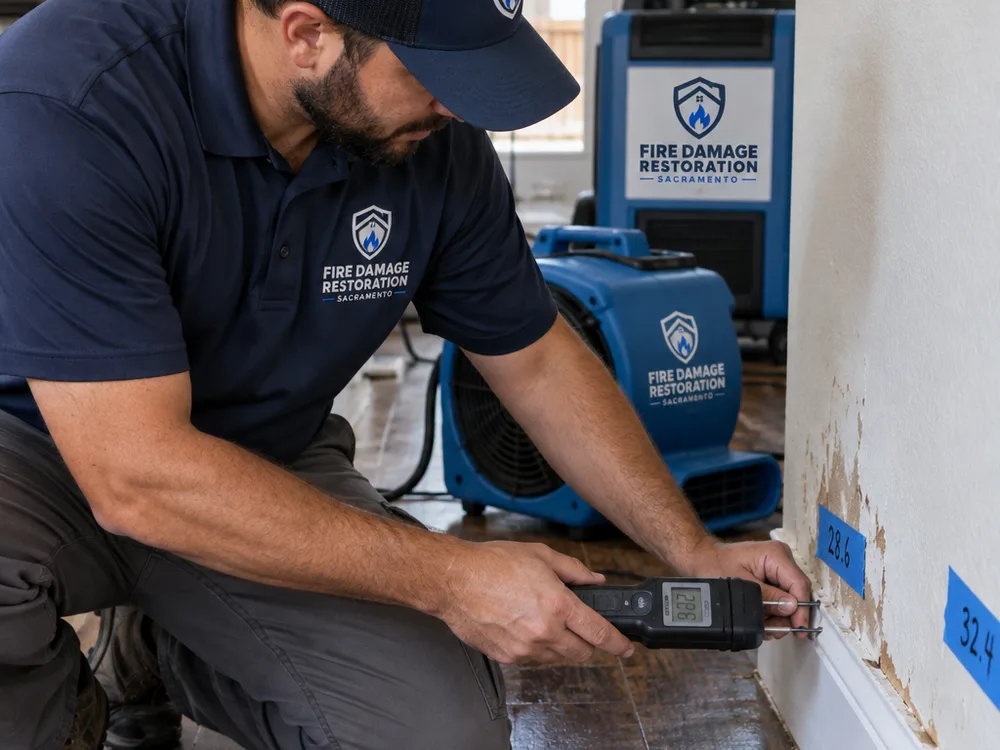
Water mitigation is the immediate, technical part of the job: removing water, preventing secondary damage, and stabilizing materials. It is not a quick fan-and-go. Proper water mitigation in Sacramento typically includes:
- Source control: Shutting off the right valve, isolating a fixture, or confirming the leak is stopped before drying starts.
- Water extraction: Pumps for standing water and professional extractors for carpet and pad.
- Moisture mapping: Non-invasive scans plus pin meter readings at baseboards, drywall, cabinets, and subfloor.
- Controlled demolition when needed: Removing wet pad, swollen baseboard, or drywall to expose cavities so they dry instead of staying damp.
- Drying and dehumidification: Sizing equipment to the affected volume, not guessing.
- Monitoring: Documenting moisture content and adjusting equipment placement until targets are met.
In Sacramento CA, warm weather can speed up evaporation, but it can also keep indoor humidity high if the structure is closed up. That is why dehumidification and airflow strategy matter as much as extraction. Drying is finished when readings confirm it, not when the room looks dry.
What you should expect from a Sacramento water damage restoration team
A written scope before repairs
We identify what is wet, what must be removed, what can be dried in place, and what repairs are likely. That keeps the project organized and helps you compare restoration companies in Sacramento on real scope, not vague promises.
Moisture readings you can verify
We use meters and documented targets so you know when the structure is actually dry. This reduces the risk of odor, swelling, and hidden moisture returning after paint and flooring go back.
Containment and dust control
When materials have to come out, we isolate the work area and manage debris so the rest of your home or business stays usable.
Straight talk about what can be saved
Some materials dry well; others do not. We explain the difference for carpet pad, laminate, drywall, cabinets, and insulation so you can make decisions without guessing.
Repair planning that matches the drying plan
Water damage repair in Sacramento goes smoother when drying, demolition, and rebuild sequencing are aligned. We coordinate the restoration steps so you are not redoing work later.
Our process for water restoration in Sacramento CA
-
01
Inspection and moisture mapping
We start by locating the source—or confirming it is already stopped—then map affected materials with moisture meters and visual inspection. You get a clear explanation of where water traveled, including likely paths under flooring and behind baseboards.
-
02
Water extraction and stabilization
We remove standing water and extract from carpet where appropriate. If contents need to be moved to access wet areas, we do it carefully to limit disruption and prevent spread to dry rooms.
-
03
Selective removal where drying can't succeed
When materials trap moisture, we remove only what is necessary to expose cavities and prevent hidden dampness. Common examples are saturated carpet pad, swollen baseboards, and drywall that has wicked water above the flood line.
-
04
Structural drying and dehumidification
We place air movers and dehumidifiers based on the affected volume and materials. For hard-to-dry assemblies, we may use targeted drying tools, such as drying mats for certain floor systems, when appropriate.
-
05
Monitoring and documentation
We check progress with moisture readings and adjust equipment until targets are met. This documentation helps keep the project accountable and supports the repair plan.
-
06
Restoration repair plan and rebuild
Once dry standards are met, we outline the repairs needed to return the area to pre-loss condition: drywall, baseboards, flooring transitions, cabinetry toe-kicks, texture matching, and paint blending where feasible.
Sacramento homes we see most often (and what that means for drying)
Sacramento has a mix of older neighborhoods and newer builds, and construction details change how water behaves.
Midtown and East Sacramento: Older homes often have plaster, original wood flooring, and wall cavities that can hide lateral water movement. That usually means more careful moisture mapping and, sometimes, small access openings to verify conditions behind finishes.
Natomas: Many homes have slab foundations and modern assemblies where water can travel under floating floors or into toe-kicks and lower cabinets. Fast extraction and early decisions about what can be dried in place are important to keep the affected area from expanding.
Land Park: We often see hardwood and built-in cabinetry. Hardwood can sometimes be saved depending on water category, duration, and cupping, but it requires controlled drying and monitoring to avoid over-drying.
Pocket-Greenhaven: Single-story layouts can let water spread farther before it is noticed, especially when a leak starts in a laundry room or behind a refrigerator. Early containment and pulling baseboards to check behind them can prevent a small leak from becoming a multi-room project.
If you are evaluating restoration companies in Sacramento, ask how they determine the drying goal. A reputable team will talk about moisture content targets, affected materials, and verification, not just equipment counts.
How Much Does Water Damage Restoration Cost in Sacramento?
Water damage restoration in Sacramento typically runs about $1,500 to $6,500 for many residential losses, while larger or more complex projects—multiple rooms, cabinet removal, significant demolition, or prolonged saturation—can reach $10,000+ depending on what must be dried, removed, and rebuilt. A small localized leak with quick extraction and drying is usually at the lower end; a kitchen or bathroom loss with cabinetry, flooring, and drywall affected trends higher.
Final pricing depends on the category of water, how far it spread, material types such as hardwood, laminate, or tile over underlayment, access to wet cavities, and how many days of monitored drying are required. The exact cost is confirmed after an on-site inspection and moisture mapping.
“A supply line leaked under our sink and soaked the cabinet base and the floor. They explained what could be dried, what had to come out, and they showed us moisture readings each visit. The area dried out without odor and the repair plan was straightforward.”
“We had water intrusion after a storm and were worried it got behind the walls. They contained the work area, removed only what was needed, and kept the rest of the house clean while the equipment ran.”
Water damage Sacramento CA: common questions
How fast should water restoration start after a leak?
Water restoration should start as soon as the source is stopped because moisture wicks into drywall, baseboards, and subflooring quickly. In Sacramento, warm conditions can increase evaporation into indoor air, so early dehumidification and containment help keep damage from spreading to adjacent rooms.
What's the difference between water mitigation and water damage repair in Sacramento?
Water mitigation is the emergency phase—extraction, drying, dehumidification, and necessary removal of wet materials—while water damage repair is the rebuild phase, including drywall replacement, texture, baseboards, flooring, cabinetry repairs, and paint. A good Sacramento water damage restoration plan connects the two so repairs start only after moisture targets are met.
Can wet drywall be dried, or does it have to be removed?
Drywall can sometimes be dried if it is minimally affected and the water is clean, but it often needs removal when it has wicked upward, softened, or trapped moisture inside a closed cavity. The decision should be based on moisture meter readings and the ability to dry the wall cavity, not appearance alone.
Do you handle both residential and commercial water damage in Sacramento?
Yes, our team responds to both homes and businesses, and the approach stays the same: stop the source, document affected materials, set drying conditions, and verify dryness before repairs. Commercial jobs often add scheduling needs so work areas stay safe for staff and customers.
What should I do right away if I discover Sacramento water damage at night or on a weekend?
First, stop the water at the nearest shutoff you can safely access and avoid using outlets in wet areas. If water is near electrical panels or ceiling fixtures, keep the area clear and wait for professional guidance. Then get a restoration inspection scheduled so extraction and drying can begin before moisture spreads under flooring and into walls.
How do you prevent mold during water mitigation in Sacramento?
The practical way to reduce mold risk is to remove standing water, dry materials to verified targets, and keep humidity controlled with correctly sized dehumidification. When wet materials cannot be dried effectively, such as saturated pad or swollen composite components, selective removal keeps hidden areas from staying damp.
Will you provide documentation and photos for my claim?
Yes, we document moisture readings, equipment placement, and affected materials so you have a clear record of what was done and why. That documentation is also useful for planning the restoration repair scope once drying is complete.
Need water damage restoration in Sacramento CA today?
Tell us what happened and what areas are affected. We'll schedule an inspection, map the moisture, and give you a clear plan for water mitigation, drying, and the repairs needed to put the property back together.